MODULE II FOR TEACHERS Foundations of Augmentative and Alternative Communication (AAC)
MODULE II FOR TEACHERS Foundations of Augmentative and Alternative Communication (AAC)
Contur secțiune
-
MODULE II
FOR TEACHERSFoundations of Augmentative and Alternative Communication (AAC)
Augmentative and Alternative Communication technique for Inclusion (AAC-Inclusion)

Communication systems and tools.
- Bliss Symbolic Communication System
Bliss Symbolic Communication System is a method of communication in which words are represented in the form of drawings. Drawings (symbols) are a graphic illustration of the meaning of a given word. Symbols are presented in the form of simple geometric shapes, such as circles, lines, squares, arrows, etc. Each symbol has its own meaning, which is closer to concepts than to specific words. Bliss symbols represent a broad field of meaning. One symbol represents several related words, closely related in meaning. This system is very carefully thought out. When another graphic element is added to a simple symbol, a new image is created and the symbol's meaning logically changes. Consistency is maintained in the construction of the symbol. A new graphic element is a new innovation that further specifies an existing symbol or changes its meaning. A person learning to communicate using this system can understand the rules that are applied when building a new symbol.
Jacek J. Błeszyński states that symbols can be categorized, for example, into parts of speech, with each part having a specific background color. It's possible to construct statements in accordance with the syntax of a given language. When writing symbols, remember that there are precise spelling rules regarding the size of individual elements, the distance between them, and so on. Symbols require strict adherence to spelling rules; only then will they retain their proper meaning. All symbols are labeled, so the user can use the system even when interacting with someone who doesn't know this method of communication but can read. The basic Bliss dictionary contains approximately 3,000 symbols representing over 6,000 words. The Bliss symbol allows for naming a specific object, but also an abstract concept, such as a feeling. Individual symbols can be identified or entire statements can be constructed from them, in accordance with the syntax of one's native language.
The author emphasizes that the system's specificity and uniqueness lies in its ability to construct complete sentences, conduct conversations, express opinions and assessments, describe events and experiences, and thus fully develop one's personality. The simplicity of the symbols (though some appear rather abstract) and the logical development of the system allow for rapid learning of this method. The Blissa system is flexible. Starting with a limited number of symbols, the Blissa user can expand their vocabulary through various strategies and develop language skills according to their own intellectual and social abilities.
Abstract symbols are ambiguous; their appearance often doesn't directly indicate meaning, unlike pictograms. The advantage of abstract symbols is their broad semantic scope, which opens up the possibility of barrier-free communication. These symbols allow for the expression and description of:
- people,
- items,
- activities,
- feelings,
- imaginations,
- time-space relations.
How to communicate using Bliss symbols?
Jacek J. Błeszyński emphasizes that the most common communication aid is the personalized Bliss board. The design of such a board, its size, the number of symbols on it, and the way they are arranged depend on the needs and skills of the person using the board. Each symbol is inscribed above it, so that a person unfamiliar with the symbols can read its meaning. It should be noted that non-verbal children have great difficulty learning to read because they do not hear sounds. In many cases, even after years of learning, they do not achieve reading skills. However, this does not mean that they are unable to acquire new meanings expressed graphically, improve the construction of increasingly complex sentences using symbols, and develop their own language.
Children can point to symbols with their fingers, a pointer placed on their heads, or their eyes. The ability to use a whiteboard or other communication aid requires much practice on the part of the non-speaking person and patience on the part of the listener. Nevertheless, the opportunity to talk in various situations and circumstances, and the chance to connect with another person, are sufficient motivation for both parties to engage in dialogue. A child's overall development, empowerment, and academic success depend on this.
By starting with a limited number of symbols, a Bliss user can, through various strategies, expand their vocabulary and develop their language according to their intellectual and social abilities. Anyone who speaks the symbol user's native language can communicate with them and discuss any topic, as their meanings are written above the symbols. Every child is different and has an individual developmental path. Therefore, it is difficult to predict how many symbols a person will master and in what time. Many factors influence successful communication; success should not be measured by the number of symbols learned. The greatest joy comes from a child's willingness to communicate, and thus the spontaneous need to communicate, which is triggered by the ability and skill of using Bliss symbols.
- Sign language
Sign language is the language used by deaf (deaf-mute) people in a given country to communicate with each other. This means that, as with spoken languages, there are many sign languages in the world. Each has a system of conventional signs and grammatical rules. To distinguish it from emerging hybrid varieties of sign language, which combine sign language with spoken speech, we call its original form classical sign language.
Classical sign language is a national and community language, created by deaf people themselves to fulfill their natural need for communication. This language lives and develops like any living language used within a given human community and is a fully functional instrument of communication.
Each sign language has a distinctive vocabulary, ideographic signs that denote individual words, sometimes short phrases. Their number varies from a few to several thousand in different languages. These form the basis of linguistic communication.
The ideographic signs are supplemented by dactylographic signs, which consist of the finger alphabet, i.e. a set of signs denoting individual letters of the alphabet , signs for cardinal and ordinal numbers, common and decimal fractions, punctuation marks, etc.
Sign languages have their own grammatical structure, positional and spatial in nature. Communication in these languages is based on ideographic signs, gestures, and facial expressions, while dactylographic signs, aside from numerals, play only a supporting, supplementary role. It's worth noting, however, that finger alphabets initially existed independently of sign languages, and their history is much older, dating back to the late 12th century.
In addition to national sign languages, there is also an international sign language, GESTUNO. This form of communication began to develop spontaneously in international contacts between deaf people, initially primarily through athletes. This language was gradually unified by the World Federation of the Deaf and an international commission established specifically for this purpose. The World Federation of the Deaf has published several dictionaries of this language.
Sign languages share most of the features of spoken languages. These include:
● openness – consisting in the possibility of creating ever new linguistic messages;
● distant resonance – linguistic messages may refer to things or events distant in time and/or space, from the time and place in which linguistic communication takes place;
● distinctiveness - the messages of each language constitute a resource of elements clearly different from each other;
● alternation - the fact that people who use a given language can transmit linguistic messages to each other alternately;
● feedback - the sender of the linguistic message also receives it;
● fast fade – messages can only be received at the moment they are transmitted.
Significant differences between sign and spoken languages primarily lie in the different transmission channel— gestural-visual rather than vocal-auditory, which in turn limits the omnidirectionality of transmission. Despite speaking in a specific direction, sound travels around, while visual messages must be directed toward the recipient, and the recipient must gaze toward the sender. Another significant difference is the arbitrariness of messages transmitted in spoken languages (no connection between the acoustic sound of a word and its substantive content, with the exception of a few onomatopoeias) versus the iconicity of many sign signs (the associative connection between a sign sign and a characteristic visual feature of the concept it represents). The most important difference between spoken and signed languages is the lack of a phonological system in the latter. Sign ideograms cannot be broken down into elements corresponding to phonemes in spoken languages, and therefore do not have a two-level structure.
Sign language is a combination of the spatial arrangement of arms, hands, and fingers , and the movement performed in a specific direction, at a fixed speed and magnitude. These include signs performed with one hand, including true one-handed signs and signs performed with one hand on a stationary base made of the other hand, as well as two-handed signs, including symmetrical and asymmetrical signs. Facial expression, sometimes pantomime, is an integral element in many signs.
A characteristic feature of many sign language signs is iconicity – the analogy of the arrangement of fingers and hands to the shape of the object that is the sign's referent, or the similarity of the movement performed during the transmission of the sign to the movement characteristic of the action denoted by the sign. From this perspective, A. Van Uden divides sign language signs into three groups:
● iconic signs which, due to clear analogies, can be understood even by people who do not know sign language;
● esoteric signs in which there is an analogy, but for various reasons it is not easily noticeable, although it can be explained;
● arbitrary signs in which it is impossible to find an analogy to reality.
Polish Sign Language, like spoken Polish, includes nouns, adjectives, numerals, pronouns, prepositions, conjunctions, and particles. The number of users of classical sign language in Poland is estimated at 40,000-50,000. Most of them are profoundly hearing-impaired. For people with severe hearing loss who grew up among the deaf, classical sign language is also a primary or supplementary language.
- PECS Communication System
The PECS Augmentative and Alternative Communication System was developed in 1985 by Andy Bondy and Lori Frost. It is a visual system that involves the exchange of pictures.
The authors' task was to develop a method that:
1) enables effective development of communication skills in children who do not have a way to convey their intentions through speech, gestures or facial expressions,
2) allows you to quickly stop verbal prompting,
3) allows the child to understand the rules of communication,
4) will be possible to use easily in everyday life conditions.
The PECS system uses simple images to visually introduce individuals with ASD to the concept of social communication. As the authors developed and refined the PECS method, they recognized that it could be successfully used to foster communication in individuals with speech disorders other than ASD. Currently, the PECS system is being implemented in therapy for children and adults experiencing a variety of speech, language, and communication disorders and deficits.
Łukasz Maj emphasizes that during PECS therapy introduction, a person learns to express their needs using a symbol (image) representing a specific thing, activity, characteristic, etc. Beginning the PECS program does not assume that the patient has acquired prerequisite skills such as establishing eye contact, responding to commands, or imitating. The system's authors assume that a person who masters the subsequent phases of PECS should be able to express their needs, comment on events, answer questions, and engage in dialogue using complex phrases.
The PECS system is based on the principles of applied behavior analysis (ABA), B.F. Skinner's verbal behavior theory, and the Pyramid Approach to Learning. This method utilizes the principles of learning and the influence of the environment on human behavior.
Behavior analysis examines the relationship between behavior and environmental factors that precede or result from it. Applied, theoretical, and experimental behavior analysis are distinguished. Of particular importance are the consequences of behavior, which can take the form of reinforcement or punishment, influencing the frequency of specific responses. Reinforcements and punishments include positive reinforcement, negative reinforcement, positive punishment, and negative punishment.
The author states that the introduction of the PECS system provides the opportunity to develop verbal agentic behaviors. The person using PECS learns to use pictures in various functions. The first learned function is the mand, or request. The patient uses the picture to request something they care about or need. Using the PECS system, the patient can also learn tacts, or naming. The communication partner asks, " What do you see?" , and the patient uses PECS to respond. Through PECS, the patient can also learn intraverbal responses. When the communication partner begins to say, "Old bear, you're very...", the patient, when provoked, will finish by writing "sleeping" on the sentence strip . Thanks to this broad approach, the person using PECS can learn to respond to various situations.
PECS teaches communication behaviors gradually according to clearly defined stages and uses the so-called Pyramid Approach to Teaching. The Pyramid Approach to Teaching is a model that demonstrates how to create a positive learning environment. It consists of several elements that support the development of communication and learning.
● The first important element is functional skills, those that help the child in everyday life—for example, independence and coping with various situations. The goal is to make learning practical and relevant.
● The second element is the reinforcement system, which is what motivates the child to act. This could be a favorite toy, food, praise, or other reward. It's important for the child to have some influence on what motivates them, as the same things won't always work for everyone. Initially, rewards that are most appealing and easily accessible to the child are used.
● The third element is functional communication. This means that a child learns to communicate their needs in a way that others can understand—this doesn't have to be verbal, but can be a picture, gesture, or other form. The most important thing is that the other person understands the message and responds to it.
● The fourth element concerns preventing challenging behavior. The idea is to avoid situations in which the child behaves inappropriately, for example, out of frustration. It's important to observe why this behavior occurs—whether the child is trying to get something, avoid something, or react to a stimulus. This allows you to intervene earlier and reduce the risk of such situations.
This entire model helps teach communication in a structured, practical way that is tailored to the child's needs.
The Pyramid Approach to Teaching consists of a foundation and pillars. The foundation includes functional activities, effective reinforcement, functional communication, and addressing contextually inappropriate behavior.
The first pillar is generalization, the process of gradually introducing small changes that, over time, lead to significant behavioral improvements. This includes changes in stimuli (e.g., different people, places, or materials) and changes in the child's response itself, such as the pace, accuracy, length, or fluency of responses.
The second pillar is effective lessons. When planning instruction, three types are distinguished: isolated trials, where the therapist provides clear instructions and expects a simple response ; sequential lessons, in which the child performs several steps in a specific order; and incidental lessons, which arise from natural situations and the child's initiative.
The third pillar is teaching strategies, or ways to help the child achieve success. Various prompts are used: verbal, gestural, modeling, and physical. Over time, these should be reduced to allow the child to learn independence. This is achieved through methods such as withdrawing prompts, gradating them, delaying responses, and teaching chains of behaviors from the beginning or the end. Shaping, or gradually reinforcing increasingly correct responses without the use of prompts, is also an important technique.
The fourth pillar is error minimization and correction. This involves conducting instruction to reduce the number of errors and increase the student's chance of success. When errors occur, various methods of correction are used, depending on the type of lesson. In the isolated trial method, this might involve, for example, demonstrating the correct answer, providing assistance with the task, changing the task to an easier one, and repeating the exercise. In sequential lessons, the so-called "step back" is often used, i.e., providing a hint at the appropriate point in the sequence.
The entire model aims to teach in a structured, gradual way that is focused on the child's success.
The implementation of the PECS system follows a protocol defined by subsequent phases.
● Phase 1 involves teaching your child the basics of communication. They learn that they can communicate their needs by giving a picture to another person. At this stage, it's important to simply understand the principle of "I give a picture—I get what I want."
● Phase 2 focuses on bridging distance and perseverance. The child learns to approach their communication partner even if they are far away or busy. The goal is to ensure they don't give up trying to communicate and are able to independently find the picture book that serves as their communication tool.
● Phase 3 involves learning to select appropriate pictures. The child learns that they can request specific things by selecting the appropriate symbol from the communication book and passing it on to the other person.
● Phase 4 introduces simple sentence construction. The child begins using a sentence strip, writing, for example, "I want + object." The strip is then passed to a partner, who reads the message.
● Phase 5 involves answering questions like, "What do you want?" The child learns to both spontaneously ask and respond to questions asked by another person.
● Phase 6 is the stage in which the child learns to comment on the environment and answer questions such as: "What do you see?", "What do you hear?", "What is this?".
The entire PECS system leads from very simple forms of communication (handing a picture) to more complex ones (sentences, responses and comments), gradually developing communication skills.
- Braille system
Braille is the primary way of reading and writing for blind people, utilizing the sense of touch. The system was developed by Louis Braille, who was inspired by the communication method soldiers used to convey information in the dark.
Initially, characters were represented using six dots arranged in two columns and three rows. Over time, an expanded eight-dot version of the system was developed, allowing characters to be created using eight dots arranged in two columns and four rows. Both versions are still used today, although the six-dot notation is more common in paper format, while the expanded version is used in digital devices.
Braille is written by embossing the appropriate dots while leaving the rest blank. An eight-dot system allows for 256 different symbol combinations, while a six-dot system allows for 64 combinations. This makes eight-dot Braille more versatile and better suited to computers and digital devices.
Małgorzata Czerwińska emphasizes that the effectiveness of learning to read and write using the Braille method depends primarily on early initiation of educational activities and proper preparation of the blind child for learning tactile writing. This process should include developing manual dexterity, tactile perception, spatial orientation, and auditory functions, as well as activating thinking and speech. Another important element of preparation is familiarizing the child with Braille through contact with Braille labels in everyday environments, which helps build awareness of the importance of tactile writing.
The author points out that Braille learning is a two-stage process – it includes a preparatory phase and the actual learning of reading and writing. During the preparatory phase, exercises are used to develop fine motor skills, motor coordination, tactile and auditory perception, as well as learning how to use a Braille slate and machine. Braille learning is divided into a traditional approach, based on the gradual development of perceptual and motor skills, and a holistic approach, focusing on text comprehension and integrating listening, speaking, reading, and writing skills.
In the process of teaching the system, teaching aids for various purposes are used:
● sensory aids – mats, foils, magnetic boards, blocks, plasticine, modelling clay, signs, figures with protrusions to develop the ability to distinguish basic geometric shapes, show directions on a plane using both hands;
● tactile dominoes, manipulation boards, threading toys, finger paints, plasticine, clay – they are used to develop the ability to recognize similarities and differences between objects due to their tactile properties, to sort and classify objects according to a certain feature and purpose, to trace objects with fingers, to determine the beginning and end, to determine the distance between objects, to teach the ability to quickly move hands across a sheet of paper, objects and symbols, and to develop the ability to turn them, to point to the top, bottom, right and left sides of the paper;
● blocks, assemblies with holes, plush toys, puppets, toys requiring the use of different pressure forces – they are used to strengthen the shoulder girdle, develop fluidity of movements, and teach correct grip;
● tactile books (thematic books) – develop orientation in a small space, tactile perception, motor coordination, imagination, vocabulary, introduce the concept of six-point.
A helpful tool for preparing for the basic learning of the Braille system is the Mangold program, intended for blind children aged 5 and older. Older children who struggle with learning the system can also benefit from it. The goal is to familiarize students with Braille and provide initial training in reading techniques, develop tactile perception, develop light touch (the ability to use minimal pressure when the fingers touch embossed text, reduce and eliminate unfavorable vertical and horizontal hand movements), encourage the use of both hands while reading, develop skills in orientation on the page, locating lines of text, columns, drawings, and the ability to concentrate. The level of practice is adapted to various work paces. Learning with this program, combined with daily activities, should last from 6 to 16 weeks. The Mangold program is not a complete reading curriculum but primarily serves as an introductory stage, developing the ability to recognize Braille characters and tactile perception. Its effectiveness depends on integration with other elements of education, such as concept development, auditory differentiation and phonetic skills.
Małgorzata Czerwińska also emphasizes the importance of a holistic approach to learning to read, combining listening, speaking, reading, and writing. She points out the need to utilize both a traditional approach, based on the gradual development of perceptual and motor skills, and a holistic approach, focused on text comprehension and practical use of language. In the process of learning Braille, it is crucial to simultaneously develop reading and writing skills, including mastering the technique of two-handed tactile reading, which promotes increased fluency and reading speed. Appropriately selecting teaching materials, such as Braille primers and educational packages that support the integration of reading, listening, and writing, is crucial. The role of early Braille initiation and systematic labeling of the child's environment is also emphasized, which promotes natural familiarization with dotted writing.
The author emphasizes that the effectiveness of Braille learning depends on a properly conducted teaching process, including the appropriate selection of methods and writing techniques, and consideration of the student's individual abilities. It is also important to begin learning early, while ensuring the child's appropriate level of speech development and psychophysical maturity.
Małgorzata Czerwińska emphasizes that mastering reading and writing skills depends on both individual factors (including intellectual development, tactile sensitivity, health, and motivation) and environmental factors (accessibility of Braille materials, teacher training, family support, and the use of assistive technologies). The attitude of adults—parents and teachers—and their awareness of the role of Braille in a child's psychosocial development are crucial. The author points out that Braille serves a fundamental educational and nurturing function, enabling access to writing, developing reading and writing skills, learning spelling, grammar, and specialized content, and preventing secondary illiteracy. At the same time, it supports the independence, self-reliance, and social and professional integration of blind people. Despite this, there is a decline in interest in learning Braille, stemming from, among other things, a perception of its difficulty, slower reading speed, and the growing popularity of voice technologies and screen readers. Czerwińska points out that replacing Braille solely with the auditory channel is inconsistent with typhledidactics principles and can lead to limitations in students' cognitive and communicative development. She emphasizes the need to integrate Braille with information, communication, and assistive technologies from the early stages of education. However, abandoning Braille learning is considered a form of educational exclusion.
The author also emphasizes the importance of early developmental support and Braille reading initiation, which should involve parents and teachers. Tactile books play a crucial role, supporting a child's cognitive, manual, emotional, and spatial development, and preparing them for learning Braille. Early and systematic work in this area fosters independence, communicative competence, and a positive relationship with books and written text.
- Makaton
Makaton is a language program developed in the 1970s in the United Kingdom. Its creator is Margaret Walker (a speech therapist and psychiatrist). In Poland, it was developed by Bogusława B. Kaczmarek in early 2000. It is currently used worldwide.
Makaton is a method of communication that is both manual and graphic. It combines manual signs, i.e., gestures, with graphic symbols. In our work, we can combine gestures and symbols with speech. The main goal of the Makaton program is to enable basic communication using introduced symbols, and then, if possible, transition to a more comprehensive communication system, such as speech or a comprehensible system of gestures and/or symbols.
Jacek J. Błeszyński states that the signs used in Makaton are gestures and graphic symbols that can be used together or separately. The gestures in the Polish version of Makaton are primarily derived from Polish Sign Language. Some, due to their degree of motor difficulty or level of abstraction, have been adapted to the abilities of people with disabilities or replaced with more iconic gestures. For this reason, certain concepts have two manual forms, one simpler than the other.
Source: Makaton gesture database. Makaton Communication Development Program.
The author emphasizes that, unlike sign language, in Makaton, the order of signs corresponds to the order of words in spoken language, with gestures supporting only key words in a sentence, not each word. Gestures should, whenever possible, be accompanied by speech. In addition to gestures, the Makaton method also utilizes elements associated with spoken and signed language, such as facial expression, eye contact, body posture, and spatial behavior.
The second type of symbols used in Makaton are symbols, which provide a graphical representation of concepts. These are simple black-and-white line drawings, presented in such a way that they could easily be drawn by hand. Symbols do not include entries written within symbols, as is the case with, for example, Pictograms; however, entries may be used beneath the symbols.
Makaton signs do not replace speech; they merely supplement it, helping to visualize spoken words. They serve to support speech while simultaneously rehabilitating it. Speech therapy runs parallel to the introduction of manual and/or graphic forms. Makaton gestures and symbols are auxiliary forms that can be discontinued at the appropriate time.
Makaton is intended for all people of various ages and cultural backgrounds. What they all have in common is that, for various reasons, they require adapted forms of support to communicate effectively. People most often experiencing communication difficulties are those with intellectual disabilities, cerebral palsy, autism, hearing loss or deafness, and those with specific speech and language development disorders. These are generally individuals who have little or no verbal language skills.
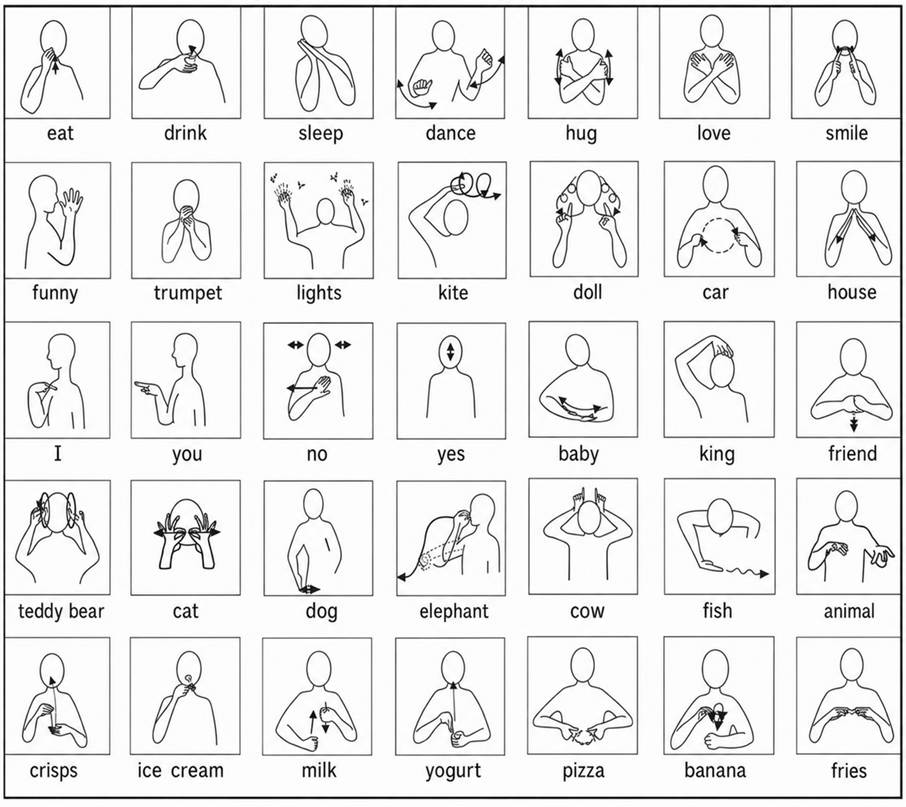
Sample gestures. Source: Makaton ®
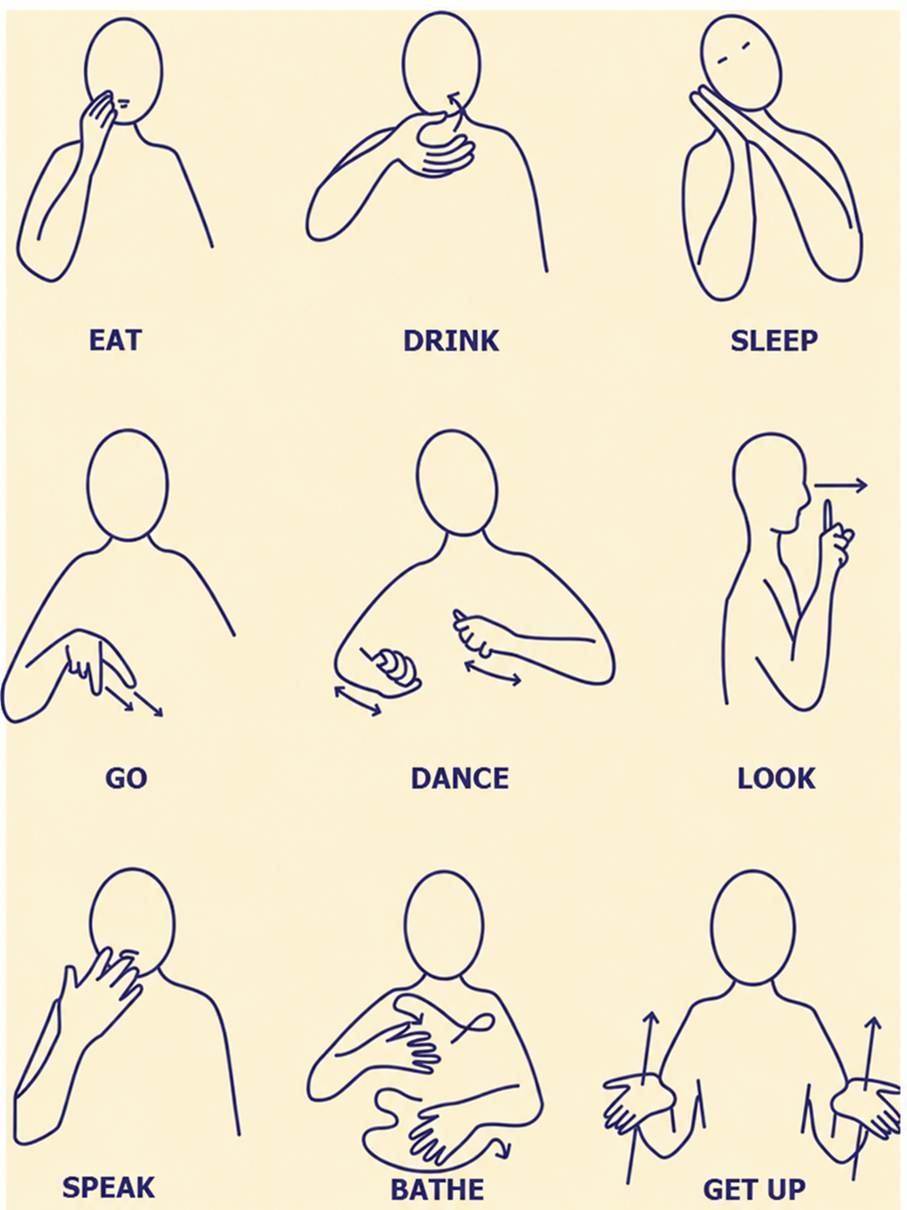
Communication tools.
Low-tech communication aids.
These aids don't require the use of technology. They are commonly called paper aids. They contain carefully selected and organized vocabulary. They can be created using both popular graphics programs and dedicated AAC programs with symbol sets. These programs allow for the selection of symbols, their arrangement on the page, their size, editing, and printing. The most popular in Poland include:
- Picture Communication Symbols (PCS) - a set containing several thousand American symbols. The Boardmaker program allows you to edit them and print the boards.
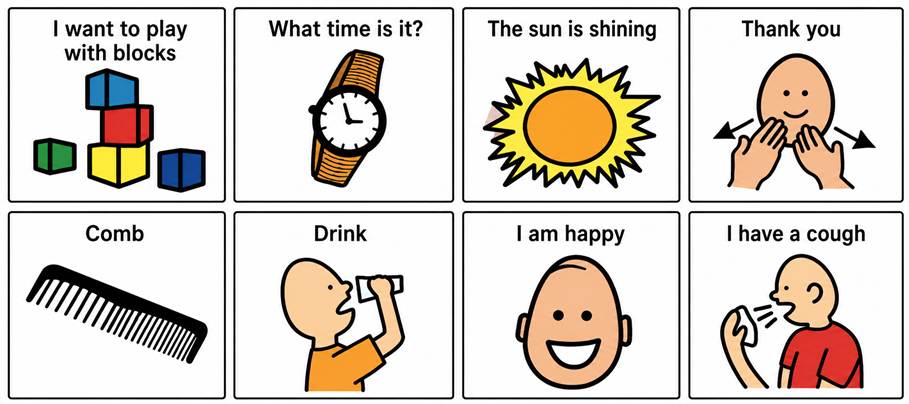
Source: Source: Boardmaker program. Makaton Communication Development Program.
2. MÓWik Symbols - approximately 12,000 Polish symbols. They can be edited and printed using the MÓWik Print program. They are also used in ready-made teaching aids.
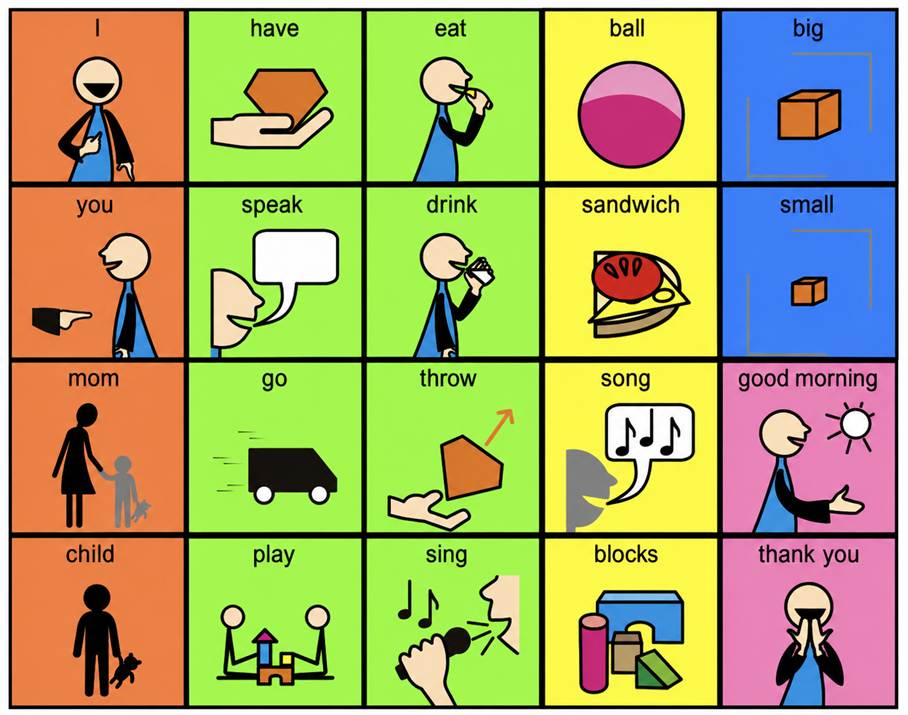
Source: own resources, table created in the MÓWik Print program.
3. Makaton Symbols - Makaton contains both symbols (approximately 10,000) and gestures. Using these, you can create tables in SymTab.
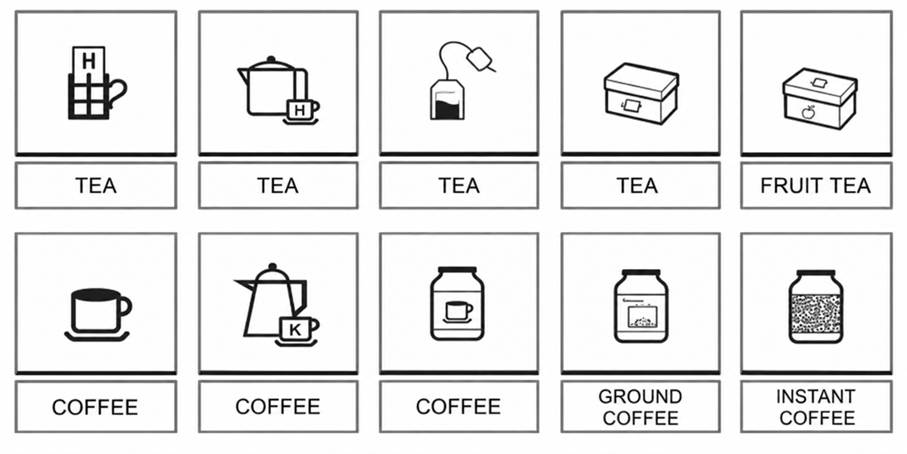
Source: Makaton system graphic symbol database. "Food" level. Makaton Communication Development Program.
4. PIC (Picture Ideogram Communication) pictograms – white symbols on a black background. They contain a collection of approximately two thousand ideograms and images. Available in the Pictogram Language program and teaching aids.
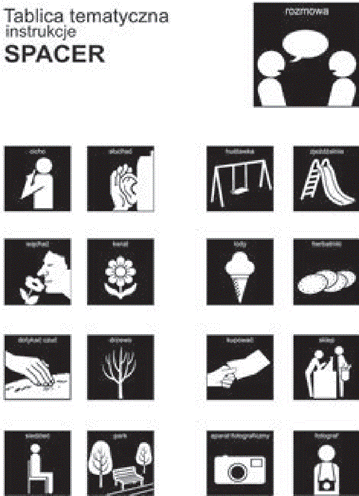
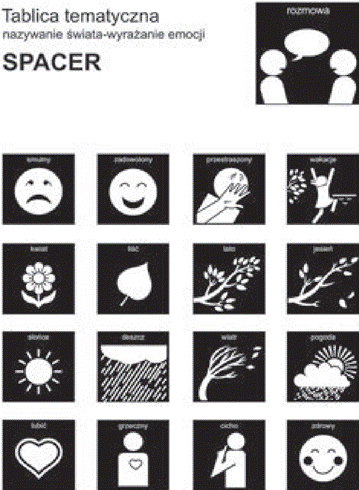
Source: collections of the Private Consultation and Training Center for Speech Therapy "Piktograms" in Szczecin.
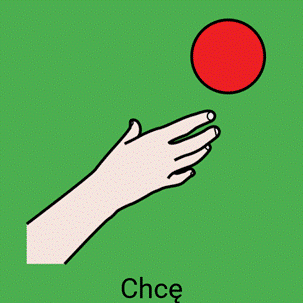
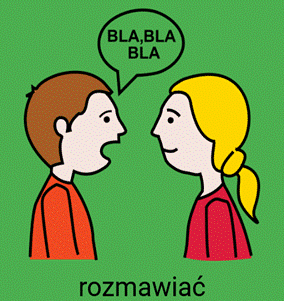
5. Arasaac Symbols – a free set of about 12,000 symbols available online: https://arasaac.org/aac/pl .
Medium technology communication aids.
1.Sound buttons – enable recording and playback of audio messages by pressing a button.
BIGmack – a popular, single-button AAC (Augmentative and Alternative Communication) communicator designed for people who are speechless or have communication difficulties. It allows you to record and play a single message (from 2 seconds to up to 120 seconds) with the press of a large, colorful button.
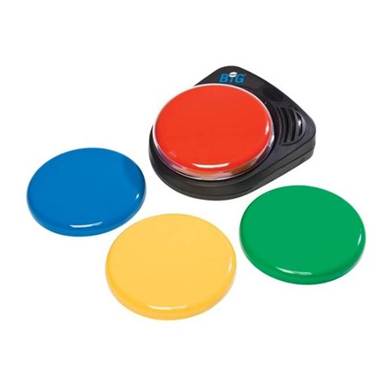
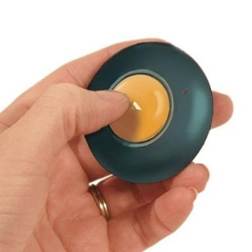
2. GoTalk Button - a handy, universal communicator that allows you to record a single message of up to 10 seconds. The device has a small magnet underneath, allowing you to place it on a refrigerator, for example. Multiple GoTalk Buttons can be used to create a multi-message communicator.
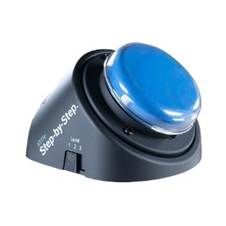
3. Little Step by Step/ Big Step by Step – a communicator that allows you to record a series of messages at three levels, which are then played back sequentially each time a button is pressed. Thanks to the level switch (three levels), you can create sequences for different times of day or typical situations. The total length of the sequences across all levels is 240 seconds.
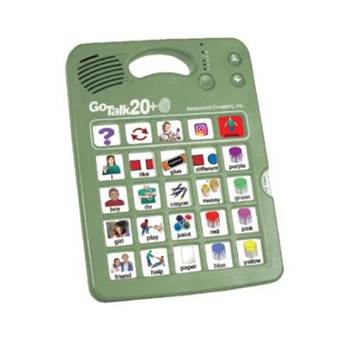
4. goTalk – a communicator supporting alternative communication (AAC), whose primary function is to enable people who are speechless or have difficulty expressing their needs, emotions, and information using recorded messages, symbols, and a speech synthesizer. The system operates based on interactive fields containing images, photos, or text, which, when selected, play a corresponding voice message. This allows the user to conduct basic or extended communication in everyday situations. Up to 100 messages can be recorded and played back on goTalk communicators.

High-technology communication aids.
When implementing the teaching process, teachers are obligated to utilize advanced technologies. The Polish AAC market offers numerous programs that facilitate adapting teaching aids to the needs of non-verbal students, and even students with significant mobility limitations. Using these programs facilitates, and sometimes even enables, active communicative participation in the lesson. Among the most useful and popular are:
Boardmaker Speaking Dynamically Pro – a program for editing, printing, and creating dynamic boards with PCS symbols. It can be used to create communication boards and dynamic teaching aids. This program can be used by students with physical disabilities (with the use of appropriate hardware – buttons with an interface).
Grid 3 is a program for creating dynamic boards. It can be used to create communication boards and dynamic teaching aids. It is suitable for students with motor disabilities (using appropriate hardware – buttons with an interface). It allows the creation of boards that allow a user with motor disabilities to operate other applications (YouTube, music listening programs, etc.).
SymWriter - a program for creating work cards and communication boards.
PCEye 5 – a device and software for operating a computer using the eyeballs. Compatible with Windows computers and laptops.
The C-eye Pro system is a stationary device and software for operating a computer using the eyeballs. It enables communication via a computer. It is not portable, making it particularly useful for people who are confined to their room, for example, in the hospital or at home.
MÓWik – an augmentative communication program for Android mobile devices. Equipped with symbols, dynamic arrays, and speech synthesis, it features a Polish grammar system. Also available with grammar for other Slavic languages.
GADAczek and MÓWik Book are apps for Android devices, including free versions. They imitate the use of communication aids with buttons. They allow you to record messages and insert symbols and photos. They are useful for creating communication boards in various situations, especially when non-synthesized speech, with intonation and expression, is required, such as singing songs, role-playing in a play, or participatory reading.
LetMeTalk – a mobile app for iOS devices with a speech synthesizer. It relies on symbols from the Arassc database. It allows you to create communication tables and construct sentences.
augmentative and alternative communication application developed by researchers from the School of Information Studies at McGill University in Canada. This free application aims to help people with disabilities communicate with speech through the use of pictographic symbols. Click AAC automatically generates vocabulary symbols related to the scene shown in the input photo. Users can produce computer-generated speech by clicking on the symbols. Clic AAC offers three types of vocabulary options: descriptive, related, and narrative. It is fully customizable, allowing users to remove unwanted vocabulary items, edit them, add new words and phrases, and rearrange photos and vocabulary items. The application is highly flexible, as users can adjust the size of each component in the interface to suit their needs.
Cboard is a free web-based application for children and adults with speech and language impairments that can aid communication. It allows users to create their own boards. Cboard is available on various platforms, including desktop computers, tablets, and mobile phones. It also supports a wide range of languages, making it suitable for use in a variety of life situations.
CoughDrop is a tool designed for people who, for various reasons, are unable to communicate. Thanks to its cloud-based functionality, the program offers offline work with automatic data synchronization. This means that all created boards are available on any device the user is logged in to. CoughDrop provides access to a wide range of symbols, such as Arasaac, PCS, SymbolStix, and custom graphics, allowing for even better customization of communication to the user's needs. The program also allows for the connection of supervisors, who can monitor the user's progress and modify communication boards. This significantly simplifies the development of a communication environment and supports the therapeutic process. Furthermore, the program supports work on various devices, utilizing touch, a computer mouse, scanning, and eye tracking. This allows for the adaptation of interaction to the user's capabilities and preferences.
NeuroTab – a tablet with software for comprehensive cognitive rehabilitation, adapted to individuals with various neurological deficits. It includes a ready-made communication book with a speech synthesizer for children and adults.
Creating books for communication.
A communication book is a personal, multi-page resource for AAC users that contains essential vocabulary presented in the form of AAC symbols, enabling communication with others. Symbols are placed on multiple levels, which the user can directly or indirectly control and access. Entries are configured in grids of boxes, usually in rows and columns arranged on a level according to a specific organizational strategy – thematic (linguistic organization of the dictionary system) or linguistic. The number of symbols per page depends on the age, cognitive, and physical abilities of the user. The vocabulary range changes with the development (age and abilities) of the book's owner, their needs, and interests. The book can be a large or small binder, or a series of bound sheets or interconnected communication boards, with symbols attached permanently or movably (with Velcro or magnets). It can be made of various materials (plastic, cardboard, or textured). Its design, size, quality (e.g. with objects, photographs, pictures, letters), number of pages and scope correspond to the individual capabilities and needs of the user (e.g. categorized, thematic communication books) determined during the AAC diagnosis.
Vocabulary selection and linguistic organization of the system.
Choosing vocabulary is a crucial element of planning a communication strategy. The first symbols used are most often related to the user's interests and needs. They refer to a specific, familiar context or phenomenon, and to things that are familiar to the user. Vocabulary changes as communication experiences are acquired. The use of a given type of symbol and its combination depends on the preferences of the user and their communication partners [Grycman, Jerzyk, Bucyk 2020].
To precisely determine the vocabulary selection for an AAC user, Alina Smyczek developed an interview questionnaire.
Vocabulary for a Person Needing AAC - Interview Questionnaire
The purpose of this form is to gather vocabulary for the person for whom the communication aid is being designed. Since we most often talk about what happens to us, what we participate in, and what engages us emotionally, this vocabulary is most needed.

In each category, please provide the words most needed to describe the world in which the non-speaking person lives. Of course, access to more neutral, universal vocabulary is also necessary, but a therapist can provide these. Only those close to the non-speaking person who know them well, their style, needs, interests, and communication situations involving them, can suggest words that relate to the non-speaking person's life. If any area of the form below does not apply to the non-speaking person, please skip it and leave the space blank.*if a word fits into several categories, you can enter it multiple times
Name of person needing AAC…...
Age
Who is involved in filling out the form……
1. PEOPLE AND CHARACTERS
a. Family
⮚ Adults
⮚ Children / peers
b. Friends
⮚ Adults
⮚ Children / peers
c. People from school/kindergarten
⮚ Adults
⮚ Children / peers
d. People from other backgrounds, with a description of who they are, e.g. Mrs. Zosia, neighbor, priest Jerzy, etc.
e. Other important people
f. Important characters from films and books
2. PLACES
a. Places in the house and around the house
b. Places in school/kindergarten
c. Places outside home and school
⮚ Parents' workplaces
⮚ Places where a person goes/goes every day, regularly
⮚ Favorite places
⮚ Disliked places
⮚ Important places where the person has been or wants to be (including e.g. countries, cities, geographic regions)
3. ACTIVITIES
a. Daily activities
b. Household chores/activities
c. School activities
⮚ Names of classes
⮚ Names of extracurricular activities
d. Favorite activities/activities
e. Hobbies/passions
f. Disliked activities/activities
g. Important activities of significant people
4.THINGS
a. Important personal items
b. Equipment and facilities for everyday use
c. Important school-related subjects
d. Important items for free time
⮚ games, puzzles
⮚ books
⮚ newspapers
⮚ toys
⮚ other
e. Other important items
f. Dressing Vocabulary
g. Hygiene vocabulary
h. Other important words about things
5. HEALTH/WELL-BEING
a. Serious illnesses or threats to health
b. Treatments and activities needed for
maintaining good condition
user
c. other necessary words related to
health
6. FOOD AND DRINK
a. Frequently eaten/favorite
products
b. Frequently eaten/favorite
dishes
c. disliked products
d. disliked foods
e. Special recommendations (allergies, diets)
f. Other necessary words related to
food
7. COMPUTER/SMARTPHONE/TABLET
a. Names of equipment used and
accessories
b. Names of programs used/
application
c. Topics/names of favorite pages
online
d. Most common difficulties
e. Other necessary words related to
computer
8. MUSIC
a. Favorite music
⮚ type
⮚ contractors
⮚ instruments
b. Disliked music
⮚ type
⮚ contractors
⮚ instruments
c. Ways of listening to music
d. Other useful words for listening to music
9. TV/VIDEO/DVD
- Equipment for watching movies/programs
b. Available TV channels
c. Most important channels
d. Favorite (U) / Dislike (N)
programs
e. Favorite (U) / Dislike (N)
TV series
f. Favorite (U) / Dislike (N)
movies
g. Favorite (U) / Dislike (N)
artists
h. Other necessary words related to
TV/video/DVD
10. SPORT
a. Favorite (U) / Dislike (N)
sports disciplines
b. Favorite sportsmen
c. Sports practiced/equipment needed
11. NATURE
a. Favorite animals/plants
b. Disliked animals/plants
c. Need words related to
nature
12. TECHNIQUE
a.Important vehicles
b. Important technical devices
c. Other necessary words related to technology
13. RELIGION
a.Important items related to religion
b. Important rituals/activities related to
with religion
c. Other necessary words related to
religion
14. CELEBRATIONS/HOLIDAYS/EVENTS
in the family
bAt school/kindergarten
c. In the local environment
15. BEHAVIOR REGULATION
a. Difficulty functioning/
behavior
b. Ways to deal with
behavior / functioning
(soothing activities)
16. THE MOST COMMON TOPICS OF CONVERSATIONS OF A NON-SPEAKING PERSON
with everyone
b. With mom
c. With dad
d………………………………
e……………………………….
f……………………………….
Alina Smyczek, Krakow 2009-2014.
The linguistic organization of the system refers to the way symbols are arranged and distinguished in AAC aids. This facilitates learning to navigate the system. Communication boards are one form of system organization (e.g., a main board, choice boards, topic boards, a board with a section of always-available signs, an alphabetical communication board, boards for recording utterances, and dynamic boards). These boards can have varying degrees of sophistication. The frequency of word/sign use can be a key factor in determining their placement in AAC aids.
The appearance of signs is useful in locating desired messages on a communication board. Their color, borders, bold text, and background can all make it easier for the user.
The challenge is organizing the language system so that the user can freely and quickly produce utterances. The arrangement of signs should be understandable and encourage communication partners to engage in conversation, as well as facilitate the learning of grammatical forms and the construction of correct sentences. The use of colors allows some users to better understand linguistic structures and combine graphic signs into phrases and sentences. A conventional color-based utterance system can aid in organizing vocabulary. It is important to consistently use a uniform key in all AAC aids created to meet the user's individual needs [Grycman, Jerzyk, Bucyk 2020].
The Fitzgerald key is a commonly used color code. In Poland, the following color code applies.
people
orange
activities
green
definitions
blue
nouns
yellow
conversational phrases
pink
other
white
There is also a modified Fitzgerald key, which is more extensive and refers primarily to parts of a sentence. It is used primarily in English-language books.adjectives
blue
verbs
green
pronouns
yellow
nouns
orange
conjunctions
white
conversational phrases
pink
questions
purple
adverbs
brown
important information - negatives
red
determiners, e.g. nouns
gray
Navigating your individual communication system.
An individual communication system consists of many different components. Both the AAC user and the communication partner must become familiar with it. A crucial principle is the use of motor memory in the learning process. Signs/symbols should not change their initial position in the communication aid.
Examples of tables from communication books.

Source: own resources, MÓWik Print symbols
Source: own resources, MÓWik Print symbols
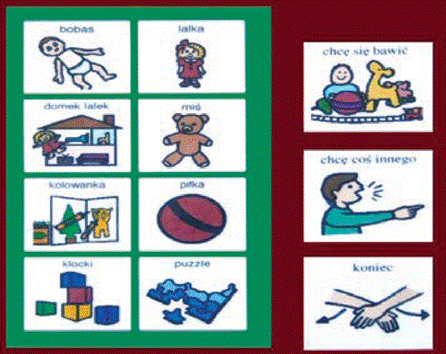
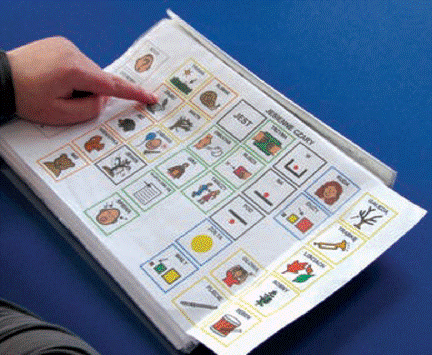
Source: collections of the Krystyna Rajtar Rehabilitation and Educational Centre in Jarosław, operating within the Polish Association for Persons with Mental Disabilities, Jarosław Branch.
Funded by the European Union. Views and opinions expressed are however those of the author(s) only and do not necessarily reflect those of the European Union or the National Agency for Community Programs in the Field of Education and Vocational Training (ANPCDEFP). Neither the European Union nor ANPCDEFP can be held responsible for them